Because of You…

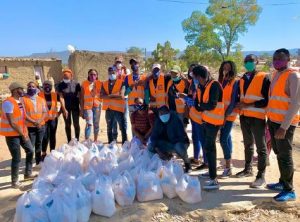
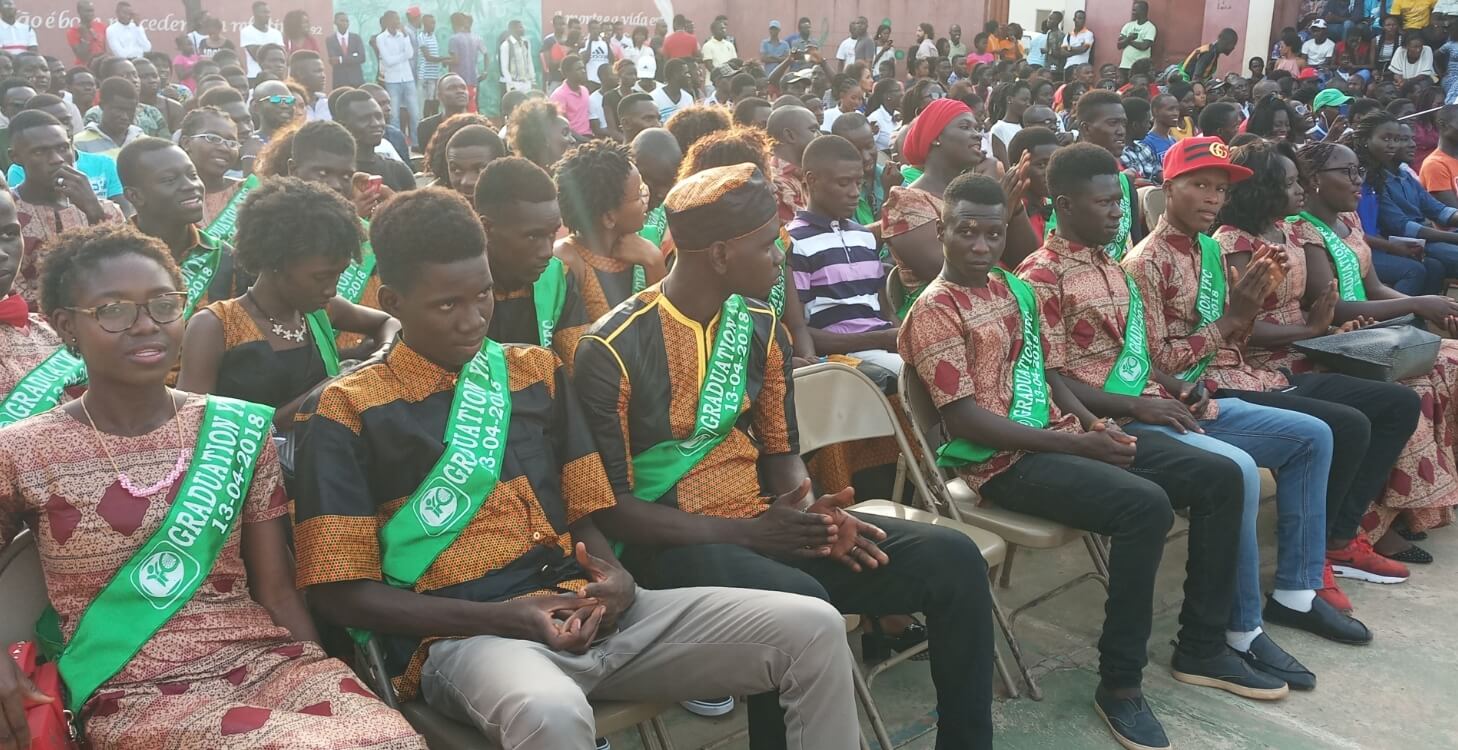
Young people who are suffering because of poverty, homelessness, war, poor medical care, corruption, and AIDS are learning about the hope that Jesus Christ offers. Youth for Christ has local ministries in Lubango, Namibe, Huambo, Cunene and Kuito.  They are reaching young people through school ministries, outreaches, clubs, training on abstinence, correspondence Bible Courses and bible studies.

Prayer Needs

  • Spiritual protection for staff, volunteers, Board members and their families
  • Funding for the development of a training camp and support of the ministry
  • Increased and effective ministry to schools and churches
  • Increased involvement of more youth leaders in training and camps
  • Funding to build our own Ministry Centre, since the rent is very high (for it we need about US $ 25 000)
  • Transition process at Leadership in several levels
  • Effective Follow up program for those who are being reached through our ministry
  • Office equipment (computers & printers for local ministries)

About Angola

Angola

Location of Angola

Introduction

Angola is rebuilding its country after the end of a 27-year civil war in 2002. Fighting between the Popular Movement for the Liberation of Angola (MPLA), led by Jose Eduardo DOS SANTOS, and the National Union for the Total Independence of Angola (UNITA), led by Jonas SAVIMBI, followed independence from Portugal in 1975. Peace seemed imminent in 1992 when Angola held national elections, but fighting picked up again by 1996. Up to 1.5 million lives may have been lost - and 4 million people displaced - in the quarter century of fighting. SAVIMBI's death in 2002 ended UNITA's insurgency and strengthened the MPLA's hold on power. President DOS SANTOS held legislative elections in September 2008 and, despite promising to hold presidential elections in 2009, has since made a presidential poll contingent on the drafting of a new constitution.

Geography

Location

Location: Southern Africa, bordering the South Atlantic Ocean, between Namibia and Democratic Republic of the Congo
Geographic Coordinates: 12 30 S, 18 30 E

Area

Total Area: 1,246,700 sq km Rank: 23
Land Area: 1,246,700 sq km
Water Area: 0 sq km
Comparison: slightly less than twice the size of Texas
Land Boundaries: 5,198 km
Bordering Countries: Democratic Republic of the Congo 2,511 km (of which 225 km is the boundary of discontiguous Cabinda Province), Republic of the Congo 201 km, Namibia 1,376 km, Zambia 1,110 km
Coastline: 1,600 km

Climate

semiarid in south and along coast to Luanda; north has cool, dry season (May to October) and hot, rainy season (November to April)

Terrain

narrow coastal plain rises abruptly to vast interior plateau

Elevations

Lowest Point: Atlantic Ocean 0 m
Highest Point: Morro de Moco 2,620 m

Natural Resources

petroleum, diamonds, iron ore, phosphates, copper, feldspar, gold, bauxite, uranium

Land Use

Arable land: 2.65%
Permanent Crops: 0.23%
Other: 97.12% (2005)
Irrigated Land: 800 sq km (2003)
Renewable Water Resources: 184 cu km (1987)
Total Freshwater withdrawal (domestic/industrial/agricultural): 0.35 cu km/yr (23%/17%/60%)
Freshwater Withdrawal Per Capita: 22 cu m/yr (2000)

Environment

Natural Hazards: locally heavy rainfall causes periodic flooding on the plateau
Environmental Issues: overuse of pastures and subsequent soil erosion attributable to population pressures; desertification; deforestation of tropical rain forest, in response to both international demand for tropical timber and to domestic use as fuel, resulting in loss of biodiversity; soil erosion contributing to water pollution and siltation of rivers and dams; inadequate supplies of potable water
Environmental Agreements: Party to: Biodiversity, Climate Change, Climate Change-Kyoto Protocol, Desertification, Law of the Sea, Marine Dumping, Ozone Layer Protection, Ship Pollution

Geography Notes

the province of Cabinda is an exclave, separated from the rest of the country by the Democratic Republic of the Congo

People

Population: 12,799,293 (July 2010 est.) Rank: 70

Age Structure

0-14 years: 43.5% (male 2,812,359/female 2,759,047)
15-64 years: 53.7% (male 3,496,726/female 3,382,440)
65 years and over: 2.7% (male 153,678/female 195,043) (2010 est.)
Median Age: 18 years

Population Growth

Growth Rate: 2.095% (2010 est.) Rank: 50
Birth Rate: 43.69 births/1,000 population (2010 est.) Rank: 6
Death Rate: 24.08 deaths/1,000 population (July 2010 est.) Rank: 1
Net Migration Rate: 1.34 migrant(s)/1,000 population (2010 est.) Rank: 49

Urbanization

Urban Population: 57% of total population (2008)
Rate of Urbanization: 4.4% annual rate of change (2005-10 est.)

Life and Death

Infant Mortality Rate: 180.21 deaths/1,000 live births Rank: 1
Life Expectancy at Birth: 38.2 years Rank: 224
Fertility Rate: 6.05 children born/woman (2010 est.) Rank: 8

Health and Disease

HIV/AIDS - Adult Prevalence Rate: 2.1% (2007 est.) Rank: 29
People living with HIV/AIDS: 190,000 (2007 est.) Rank: 32
HIV/AIDS Deaths: 11,000 (2007 est.) Rank: 27
Degree of Risk for Major Infectious Diseases: very high
Food or waterborne diseases: bacterial and protozoal diarrhea, hepatitis A, typhoid fever
Vectorborne Diseases: malaria, African trypanosomiasis (sleeping sickness)
Water Contact Diseases: schistosomiasis (2009)

Nationality and Culture

Noun: Angolan(s)
Adjective: Angolan
Ethnic Groups: Ovimbundu 37%, Kimbundu 25%, Bakongo 13%, mestico (mixed European and native African) 2%, European 1%, other 22%
Religion: indigenous beliefs 47%, Roman Catholic 38%, Protestant 15% (1998 est.)
Languages: Portuguese (official), Bantu and other African languages

Education

Literacy (Meaning, age 15 and over can read and write): 67.4% Male: 82.9% Female: 54.2% (2001 est.)
Education expenditures: 2.4% of GDP (2005) Rank: 159

Government

Country Name

Conventional Long Form: Republic of Angola
Conventional Short Form: Angola
Local Long Form: Republica de Angola
Local Short Form: Angola
Formerly: People's Republic of Angola
Government Type: republic; multiparty presidential regime
Capital: Luanda Geographic Coordinates: 8 50 S, 13 14 E

Administrative divisions

18 provinces (provincias, singular - provincia); Bengo, Benguela, Bie, Cabinda, Cuando Cubango, Cuanza Norte, Cuanza Sul, Cunene, Huambo, Huila, Luanda, Lunda Norte, Lunda Sul, Malanje, Moxico, Namibe, Uige, Zaire
Independence: 11 November 1975 (from Portugal)
National holiday: Independence Day, 11 November (1975)
Constitution: adopted by People's Assembly 25 August 1992
Legal system: based on Portuguese civil law system and customary law; modified to accommodate political pluralism and increased use of free markets; has not accepted compulsory ICJ jurisdiction
Suffrage: 18 years of age; universal

Executive Branch

Chief of State: President Jose Eduardo DOS SANTOS (since 21 September 1979); note - the president is both chief of state and head of government
Head of Government: President Jose Eduardo DOS SANTOS (since 21 September 1979); Antonio Paulo KASSOMA was named prime minister by MPLA on 26 September 2008
Cabinet: Council of Ministers appointed by the president
Elections: president elected by universal ballot for a five-year term (eligible for a second consecutive or discontinuous term) under the 1992 constitution; President DOS SANTOS was selected by the party to take over after the death of former President Augustino NETO(1979) under a one-party system and stood for reelection in Angola's first multiparty elections on 29-30 September 1992 (next were to be held in September 2009 but have been postponed)
Election Results: Jose Eduardo DOS SANTOS 49.6%, Jonas SAVIMBI 40.1%, making a run-off election necessary; the run-off was never held leaving DOS SANTOS in his current position as the president

Legislative Branch

unicameral National Assembly or Assembleia Nacional (220 seats; members elected by proportional vote to serve four-year terms)
Elections: last held on 5-6 September 2008 (next to be held in September 2012)
Election Results: percent of vote by party - MPLA 81.6%, UNITA 10.4%, PRS 3.2%, ND 1.2%, FNLA 1.1%, other 2.5%; seats by party - MPLA 191, UNITA 16, PRS 8, FNLA 3, ND 2

Judicial branch

Supreme Court and separate provincial courts (judges are appointed by the president)

Politics

Political parties and leaders: National Front for the Liberation of Angola or FNLA [Ngola KABANGU]; National Union for the Total Independence of Angola or UNITA [Isaias SAMAKUVA] (largest opposition party); New Democracy Electoral Union or ND [Quintino de MOREIRA]; Popular Movement for the Liberation of Angola or MPLA [Jose Eduardo DOS SANTOS] (ruling party in power since 1975); Social Renewal Party or PRS [Eduardo KUANGANA]
Note: nine other parties participated in the legislative election in September 2008 but won no seats
Political pressure groups and leaders: Front for the Liberation of the Enclave of Cabinda or FLEC [N'zita Henriques TIAGO, Antonio Bento BEMBE]
Note: FLEC's small-scale armed struggle for the independence of Cabinda Province persists despite the signing of a peace accord with the government in August 2006
International Organization Participation: ACP, AfDB, AU, CPLP, FAO, G-77, IAEA, IBRD, ICAO, ICCt (signatory), ICRM, IDA, IFAD, IFC, IFRCS, ILO, IMF, IMO, Interpol, IOC, IOM, IPU, ISO (correspondent), ITSO, ITU, ITUC, MIGA, NAM, OAS (observer), OPEC, SADC, UN, UNCTAD, UNESCO, UNIDO, Union Latina, UNWTO, UPU, WCO, WFTU, WHO, WIPO, WMO, WTO
Flag Description: two equal horizontal bands of red (top) and black with a centered yellow emblem consisting of a five-pointed star within half a cogwheel crossed by a machete (in the style of a hammer and sickle); red represents liberty, black the African continent, the symbols characterize workers and peasants

Economy

Economy Overview: Angola's high growth rate in recent years was driven by its oil sector, and high international oil prices. Oil production and its supporting activities contribute about 85% of GDP. Increased oil production supported growth averaging more than 15% per year from 2004 to 2007. The global recession and lower prices led to a contraction in GDP in 2009. A postwar reconstruction boom and resettlement of displaced persons has led to high rates of growth in construction and agriculture as well. Much of the country's infrastructure is still damaged or undeveloped from the 27-year-long civil war. Remnants of the conflict such as widespread land mines still mar the countryside even though an apparently durable peace was established after the death of rebel leader Jonas SAVIMBI in February 2002. Subsistence agriculture provides the main livelihood for most of the people, but half of the country's food must still be imported. Since 2005, the government has used billions of dollars in credit lines from China, Brazil, Portugal, Germany, Spain, and the EU to rebuild Angola's public infrastructure. Although consumer inflation declined from 325% in 2000 to under 13% in 2008, the stabilization policy proved unsustainable and Angola abandoned its currency peg in 2009. Angola became a member of OPEC in late 2006 and in late 2007 was assigned a production quota of 1.9 million barrels a day (bbl), somewhat less than the 2-2.5 million bbl Angola's government had wanted. In November 2009 the IMF announced its approval of Luanda's request for a Stand-By Arrangement; the loan of $1.4 billion aims to rebuild Angola's international reserves. Corruption, especially in the extractive sectors, is a major challenge.

Gross Domestic Product

GDP (purchasing power parity): $107 billion (2009 est.) Rank: 66
GDP - real growth rate: -0.3% (2009 est.) Rank: 115
GDP - per capita (PPP): $8,400 (2009 est.) Rank: 115
GDP - Composition by Sector: Agriculture: 9.6% Industry: 65.8% Services: 24.6% (2008 est.)

Labor Force

Labor Force: 7.769 million (2009 est.) Rank: 56
Labor force - by occupation: Agriculture: 85% Industry and Services: 15% (2003 est.)
Unemployment Rate: NA

Poverty

Population below poverty line: 40.5% (2006 est.)

Transnational Issues

International Disputes: Cabindan separatists continue to return to the Angolan exclave from exile in neighboring states and Europe since the 2006 ceasefire and peace agreement
Refugees and internally displaced persons - refugees (country of origin): 12,615 (Democratic Republic of Congo)
International Displaced Persons: 61,700 (27-year civil war ending in 2002; 4 million IDPs already have returned) (2007)

Want to know more? Show Full Profile